
Over ten years ago, Stephen Jakisa faced serious problems with his computer. It all started when he installed Battlefield 3, a first-person shooter set in the near future. Soon, his issues were no longer limited to the game – his browser crashed roughly every 30 minutes, and eventually, he couldn’t install any programs on his PC.
Being a programmer and tech-savvy, Stephen initially suspected a virus or buggy software. He reached out to his friend, Ioan Stevanovici, who was working on a dissertation about computer reliability.
Diagnosing the Problem: A Faulty Memory Chip
After a short diagnostic session, Stephen and Ioan discovered the culprit: a bad memory chip. Since Stephen’s PC had worked perfectly for about six months before the issues began, he had never suspected hardware problems. It was only after Ioan persuaded him to run a memory diagnostic test that the problem became apparent.
As Stephen noted:
“If this had happened to someone on the street with no technical knowledge, they would probably have been completely stuck.”
Once the faulty memory module was removed, Stephen’s computer returned to normal.
Software vs. Hardware Failures
When computers break down, most people assume software issues are to blame. However, in recent years, computer scientists have paid closer attention to hardware failures, discovering that they are much more common than many realize.

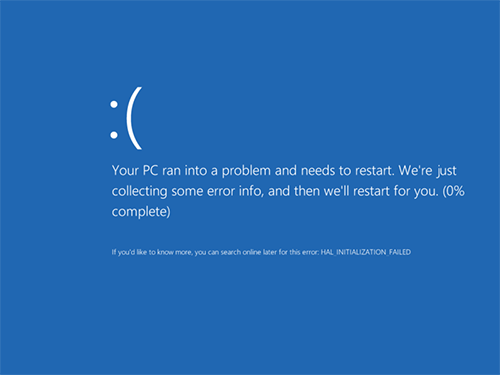
The Blue Screen of Death in Windows 10
Chip manufacturers conduct rigorous testing before releasing their products, but ensuring long-term reliability is difficult. Since the late 1970s, manufacturers have known that hardware issues can arise from bit flips inside microprocessors. As transistor sizes shrink, the behavior of charged particles becomes less predictable. These errors, known as “soft errors”, are unrelated to software.
Why Modern Chips Are More Prone to Failures
Soft errors are just part of the story. Over the past five years, researchers examining complex, large-scale computing systems have found that hardware components often fail due to:
- High temperatures
- Manufacturing defects
- Electrons unintentionally flowing between transistors or data channels
As chip designers create smaller, more powerful components, energy requirements rise to keep bits stable.
Mark Seager, Chief Technology Officer of High-Performance Computing Ecosystems at Intel, explains:
“We know how to make these chips if we don’t worry about energy consumption. But if you ask us to solve that too, it’s beyond current technical capabilities.”
Intel is collaborating with the U.S. Department of Energy and other agencies to develop 5-nm chips that could be over 1,000 times faster than today’s processors, but they will also demand enormous amounts of energy.
What This Means for Everyday Users
For ordinary computer users like Stephen Jakisa, hardware failures are an invisible threat. Chip manufacturers rarely disclose how often their products fail, keeping such information confidential.
Key takeaway: Not all computer crashes are caused by software. Memory chips and other hardware components can fail silently, causing unexpected errors, crashes, and system instability.